
Did you know that more than 100,000 malicious applications are available in official app stores? The BYOD model has changed the way we work. Employees use their personal devices to access corporate data. This brings greater flexibility and improves productivity.
The term BYOD (Bring Your Own Device) refers to the corporate practice in which employees use their own devices — such as smartphones, tablets, and laptops — to access company systems, emails, applications, and data.
This approach gained momentum with digital transformation and remote work, offering greater flexibility, agility, and convenience to employees. However, while it increases productivity, BYOD also expands the corporate attack surface, requiring heightened attention to information security.
Studies show that employees feel happier and more productive under the BYOD model. According to IDC (International Data Corporation), 77% of companies in Europe and the Americas have already adopted this practice, which allows employees to use their own devices — such as smartphones and tablets — for professional purposes. The flexibility and mobility gains are clear, but BYOD also presents significant drawbacks.
Without direct IT team control, the use of personal devices can increase exposure to digital threats. Among the main risks is greater vulnerability to the installation and use of malicious applications, which disguise themselves as legitimate apps and gain access to sensitive corporate data.
Furthermore, lost or stolen devices can expose confidential information, and so-called “shadow IT” — when employees install apps or access systems without authorization — creates unknown security gaps that are difficult to monitor.
Understanding these risks is the first step toward protecting your company. In a world where personal and professional life converge on mobile devices, vigilance is critical.
What are malicious applications?
Malicious applications are a major threat to companies that allow the use of personal devices at work. They are designed to compromise the security of smartphones and tablets, putting important corporate data at risk.
Mobile malware disguises itself as a legitimate application to deceive users. Cybercriminals place fraudulent applications even in official stores. Research shows that more than 100,000 malicious apps are waiting to be downloaded. Infiltration methods include:
- Phishing emails containing direct download links
- Seemingly useful apps that request unnecessary permissions
- Fake versions of popular applications such as WhatsApp or Instagram
- Free games that conceal malicious code
Once installed, mobile malware can cause serious damage. It steals banking credentials, accesses corporate contacts, and records typed passwords. In severe cases, it turns the device into an entry point for attacks on the corporate network.
The personal nature of BYOD devices makes the problem worse. Employees are less cautious when installing apps on their phones. This creates vulnerabilities that cyber threats exploit to access business systems.
Is your team prepared for the new challenges? Schedule a specialized consultation and strengthen your security.
How malicious applications bypass traditional defenses
Malicious applications are constantly adapting to overcome security defenses. They exploit vulnerabilities in outdated operating systems and use advanced techniques to evade detection.
A common method is disguise. These malwares present themselves as legitimate applications, appearing to be banks, social networks, or productivity tools. This allows them to pass simple tests in stores such as Google Play and App Store. The main techniques include:
- Encryption of malicious code to avoid detection
- Social engineering to obtain excessive permissions
- Exploitation of vulnerabilities in older versions of operating systems
- Attacks through unprotected public Wi-Fi networks
Antivirus bypass occurs when malwares study how antivirus software works and create new variants that go undetected. This keeps them one step ahead of security updates at all times.
In companies with personal devices, these techniques are particularly dangerous. The wide variety of devices and operating systems makes protection more difficult, creating gaps that criminals exploit to steal critical data.
See also: The importance of cybersecurity consulting for companies of all sizes
Specific challenges in BYOD environments and mobile endpoints
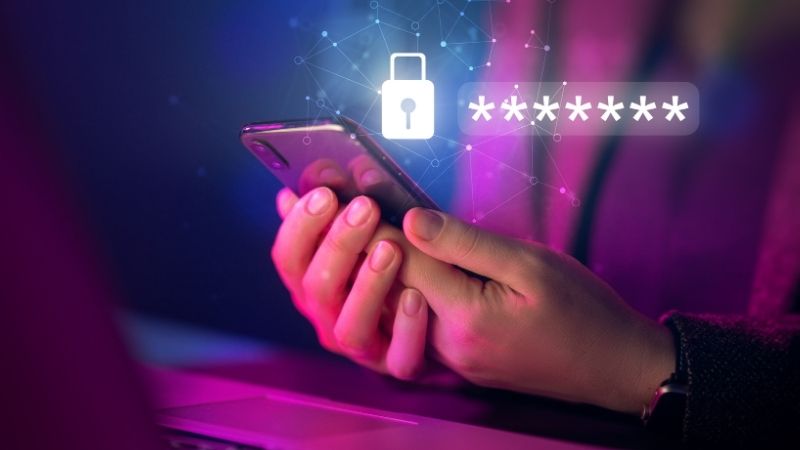
Managing mobile devices in corporate environments is a challenge. This is because employees use their own equipment, making security more difficult due to decentralized control.
Corporate security must adapt, as the traditional corporate perimeter no longer exists.
Human errors
User behavior is a major vulnerability. Many employees connect to public Wi-Fi networks without protection, opening doors to intrusions.
Employees also fail to enable two-step authentication on corporate email accounts, leaving data vulnerable. Installing applications without verification is also a recurring problem.
Many employees delay reporting lost or stolen devices, leaving sensitive information exposed for extended periods.
Excessive permissions
Seemingly harmless applications request access to unnecessary resources. A calculator app asking for access to contacts or the camera is a red flag.
These permissions create gaps for corporate information leakage, given that devices store sensitive data.
Absence of specific security policies
Companies without clear policies for mobile devices face serious problems. The lack of minimum security standards allows outdated equipment to access the corporate network.
Without processes for reporting incidents, violations go unaddressed. BYOD risks multiply when there are no limits on data accessed remotely.
Discover how to implement an effective layered defense. Speak with an ACTAR consultant today.
Practical Recommendations for Companies
To protect the corporate environment, it is essential to have a well-defined strategy. Companies must adopt measures that combine productivity and security — especially on employees’ personal devices.
Best practices start with clear BYOD policies. Each employee should sign an accountability agreement that defines usage rules and the consequences of non-compliance.
Technical implementation involves multiple layers of protection:
- Corporate password manager for centralized control
- Approved application list, blocking unauthorized installations
- Automatic updates for operating systems and software
- Mandatory multi-factor authentication (MFA) for all access
- Corporate VPN for secure connections outside the office
- Antivirus software with specific modules for mobile devices
Continuous monitoring of device activity is essential. Specialized tools help detect threats quickly. Security also depends on employee training. Training on phishing and social engineering helps identify threats. Having a response plan ready for device loss or theft is critical.
Adopting these practices improves corporate security and transforms BYOD policies into a competitive advantage — keeping corporate data protected without sacrificing the flexibility employees need.
Need help managing mobile devices? Explore our customized solutions for BYOD environments.
How ACTAR protects against malicious applications
ACTAR’s consulting team has developed a plan to combat malicious application threats. We know that mobile devices are highly vulnerable — especially in BYOD environments, where employees use their personal phones for work.
Focus on the Endpoint pillar
Endpoint protection is at the core of ACTAR’s strategy. When it comes to cyber threats, assets such as laptops, desktops, and mobile devices are frequently the targets.
Endpoint security includes vulnerability management — identifying and remediating weaknesses in systems and applications before they can be exploited by cybercriminals — as well as secure remote access solutions.
In this way, endpoint security provides a comprehensive and proactive approach to protecting an organization’s digital assets regardless of location.
Specialized consulting to shield the corporate environment
Using Next-Generation Antivirus (NGAV) and advanced behavioral analysis, our solutions detect and neutralize sophisticated threats such as ransomware before they can cause damage.
Comprehensive threat hunting capabilities proactively search for and mitigate hidden threats across the entire network. With scalable SaaS solutions, endpoint security ensures continuous updates and constant protection.
Benefits of ACTAR’s specialized consulting
ACTAR’s consulting makes your digital security a competitive advantage. It starts by identifying vulnerabilities before they cause damage, creating a strong barrier against threats.
Shielding against malicious applications in BYOD environments enables a reduction in operational costs, allowing security-focused companies to save significantly. They avoid:
- Financial losses from data breaches
- Costs related to forensic investigations
- Fines for non-compliance with regulations
- Expenses for notifying affected customers
Productivity improves when employees trust their devices. ACTAR deploys secure technologies that do not interrupt the user experience. Captive portals reinforce usage policies and block suspicious access.
Specialized support covers all devices and operating systems, freeing the IT team to focus on strategic projects. Corporate protection is completed with clear contingency plans — each company receives specific protocols to respond swiftly to incidents.
Have you identified vulnerabilities in your company? Request an assessment with our specialists.
Conclusion
Security in the BYOD model is a major challenge for companies today. More than 100,000 malicious applications are available in official stores, demonstrating that protecting corporate data requires advanced strategies.
Effective protection requires technology, processes, and education. Password managers, application policies, and regular updates are essential. Employee training is also critical for combating malicious applications.
ACTAR has solutions for these challenges. Our expertise in BYOD security helps build solutions that protect without compromising productivity. With our consulting, companies can better understand their vulnerabilities and strengthen their defenses.
Protecting your company begins with an important decision. Contact us to assess your vulnerabilities.